
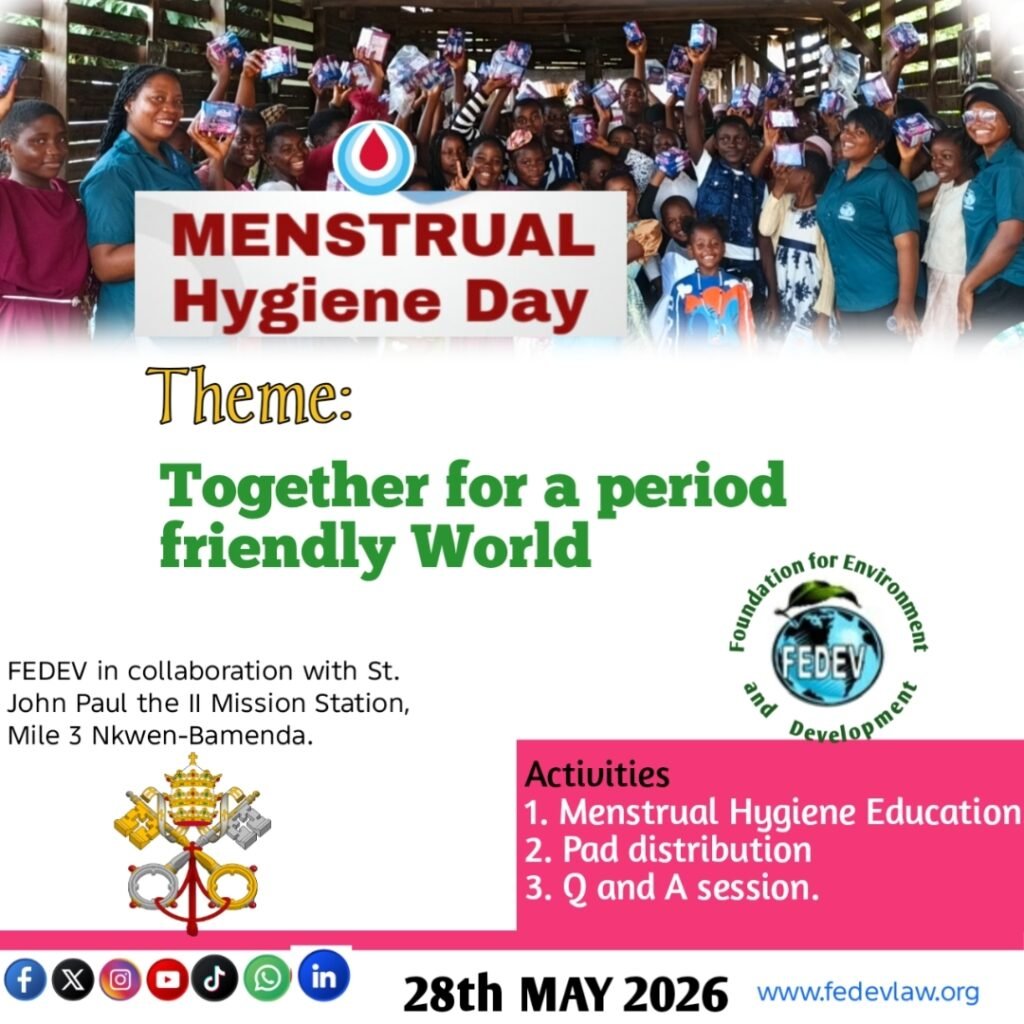
The Foundation for Environment and Development (FEDEV) sensitized close to 100 adolescent girls on the importance of menstrual hygiene management. The participants, aged between 8 and 18 years, gathered at Saint John Paul II Mission Station in Mile 3 Nkwen, Bamenda.
The event featured an interactive session centered on the global movement for a #PeriodFriendlyWorld, with the aim of promoting menstrual health and hygiene. FEDEV explained menstruation as a natural biological process during which a woman’s body sheds the lining of the uterus every month. According to the World Bank, more than 300 million women and girls worldwide menstruate every day. Ensuring proper menstrual hygiene is therefore essential for the well-being, dignity, and empowerment of women and adolescent girls.
During the discussions, the girls identified several challenges they face during menstruation, including back pain, cramps, fatigue, cultural taboos, discriminatory social norms, and limited access to affordable menstrual hygiene products. In response, FEDEV provided practical lessons on healthy and hygienic menstrual practices to help them better manage their menstrual cycles. Such knowledge contributes to reducing social and economic inequalities that can negatively affect girls’ education, health, safety, and overall development.
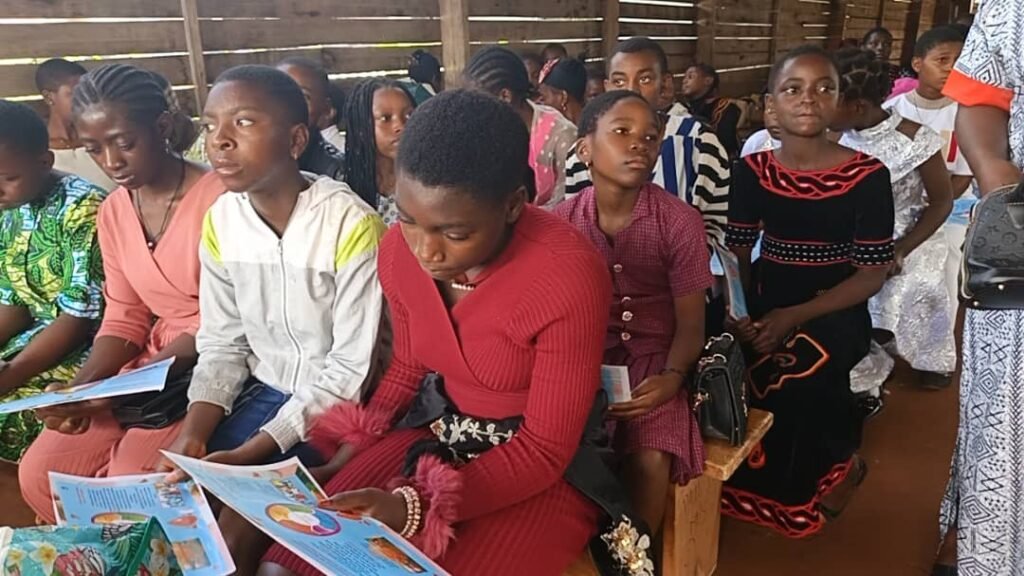
A major concern raised by participants was how to understand and calculate the menstrual cycle. This issue was addressed through practical demonstrations using illustrations of the menstrual cycle, supported by an educational flyer that enhanced understanding.
The one-day event concluded with the distribution of sanitary pads to the participants to support proper menstrual hygiene management. Research has shown that providing sanitary pads to girls can contribute to improved health outcomes and school attendance, while reducing their vulnerability to infections and other health risks (Benshaul-Tolonen et al., 2019; Phillips-Howard et al., 2016). The girls were also taught the proper methods of disposing of used sanitary pads in an environmentally responsible manner.
“Disposable sanitary pads have been proven to contribute significantly to global waste. Ensuring that women and girls improve the management and disposal of menstrual products can make a substantial difference to environmental protection,” said FEDEV’s Communication Officer, Tembe Ophilia Enjoh.
Every year on May 28, FEDEV joins the rest of the world in commemorating Menstrual Hygiene Day. Activities include awareness creation through social media campaigns, community outreach, and youth engagement initiatives. These efforts aim to advocate for the integration of menstrual hygiene management into global, national, and local policies and programs, while promoting a world where menstruation is no longer a barrier to education, health, or opportunity.