
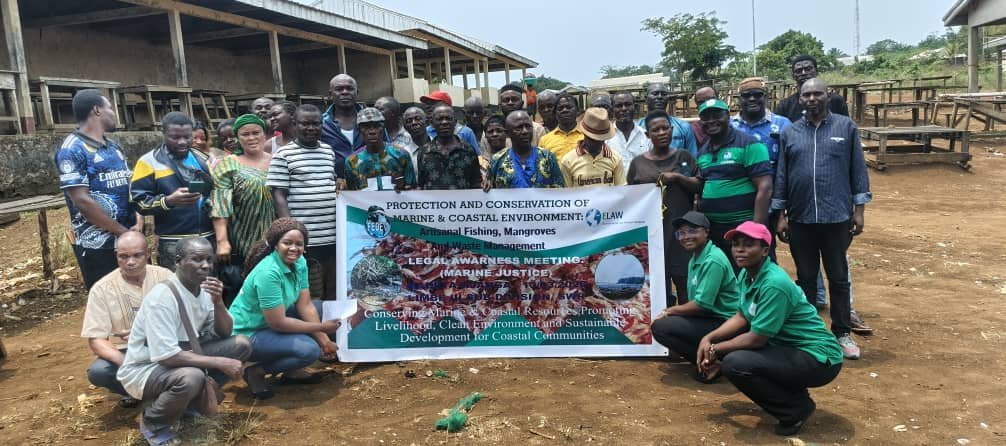
Through the Marine Justice Project, FEDEV Instils Hope in Mabeta Njanga and neighbouring coastal communities to Safeguard fisheries resources, protect mangroves, and maintain a clean Environment
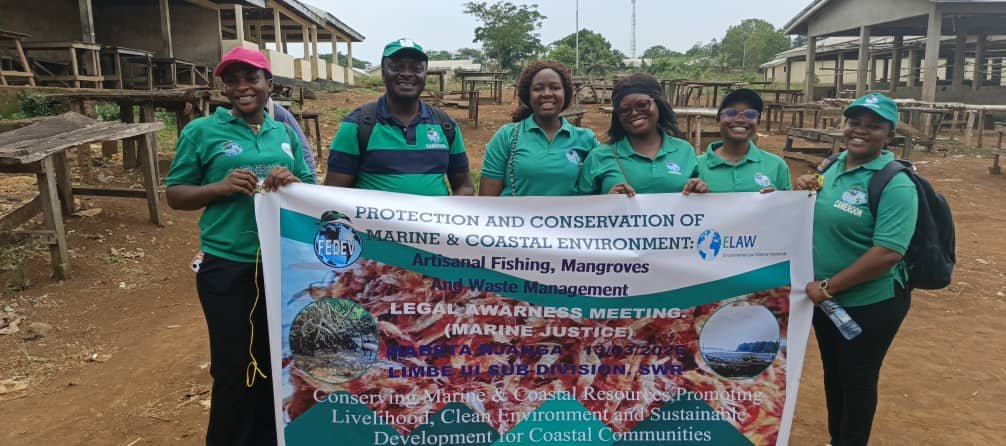
The Foundation for Environment and Development, FEDEV carried out a legal awareness workshop in Mabeta Njanga, Limbe III Subdivision, on March 13, 2026. The workshop, titled “The Protection and Conservation of Marine and Coastal Environment: Artisanal Fishing, Mangroves, and Waste Management,” aimed to strengthen community understanding and action toward environmental sustainability.
The primary objective of the workshop was to enhance stakeholder engagement and collaboration in the sustainable management, exploitation, and protection of marine and coastal ecosystems, while promoting sustainability, inclusion, and natural resilience.
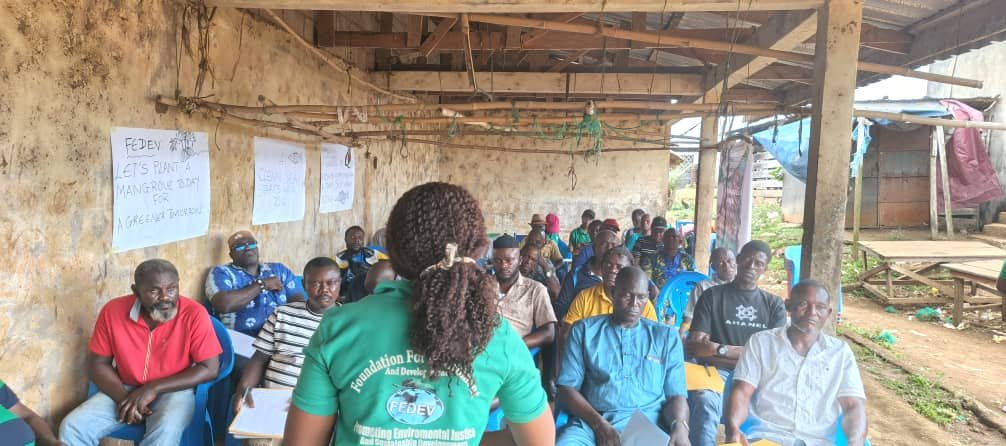
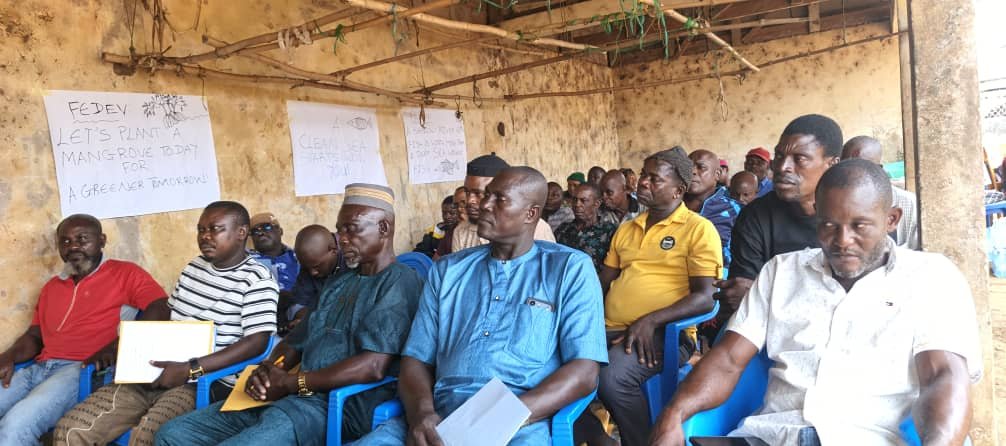
A total of 76 participants attended the event, including sub-chiefs, quarter heads, and representatives from various communities such as Mboko II, Mboma I, British Kange, Mboko I, Ijoh Mboko, New Layout, Mabeta Njanga, and Ijoh Mabeta. The following stakeholder groups were represented: canoe owners, Canoe Operators, Women, Youths, Fish smokers, Fish sellers, Mangrove exploiters and Religious leaders. The Limbe 3 Council was represented and the Chief of the Fisheries Post in Mabeta also participated as a key government stakeholder.
Held at the Mabeta village market premises, the workshop featured interactive sessions on mangrove conservation and climate resilience, artisanal fishing practices, waste management, the role of women in environmental protection, and the link between climate change and mangrove ecosystems. The participants adopted a series of measures and resolutions to leverage artisanal fishing, mangrove conservation, livelihood and environmental health.
This event followed a series of prospection visits and consultative meetings conducted by FEDEV priory with local communities and stakeholders. These engagements revealed widespread unsustainable environmental resource practices, their impacts, and the ongoing efforts by communities to address these challenges.
Speaking after the workshop, Mr. Justus Betoto, Secretary of the Mabeta Traditional Council, stated:
”After this workshop, we will begin to see things differently, and as we do, we will take action. We are already strategizing by setting up committees to address the issues discussed. Tangible results will be seen in the future as we implement solutions within our capacity.”
Similarly, Mr. Lyonga Cumber, Secretary General of the Bonabile Traditional Council, expressed appreciation:
”We are very happy for this sensitization. We appreciate that you came to our waterside community. It was a very rich session. We would like to share our challenges with you so you can advise us further. Please do not relent in your efforts—knowledge is wealth. Thank you once again.”
Mabeta Njanga is a third-class village and fishing community in the Limbe III Subdivision of Cameroon’s South West Region. Mabeta and the other fishing communities faces numerous challenges, including poor road infrastructure, especially during the rainy season, dwindling fishery resources, mangrove exploitation, illegal fishing by companies, poor waste management, plastic pollution, and dependence on contaminated water sources.
Through initiatives like this workshop, FEDEV continues to empower communities with knowledge and practical strategies to protect their environment and natural resources, ensuring a more sustainable future for coastal ecosystems and livelihoods